Shoulder and elbow pain: osteopathy near Basingstoke, at our Overton clinic
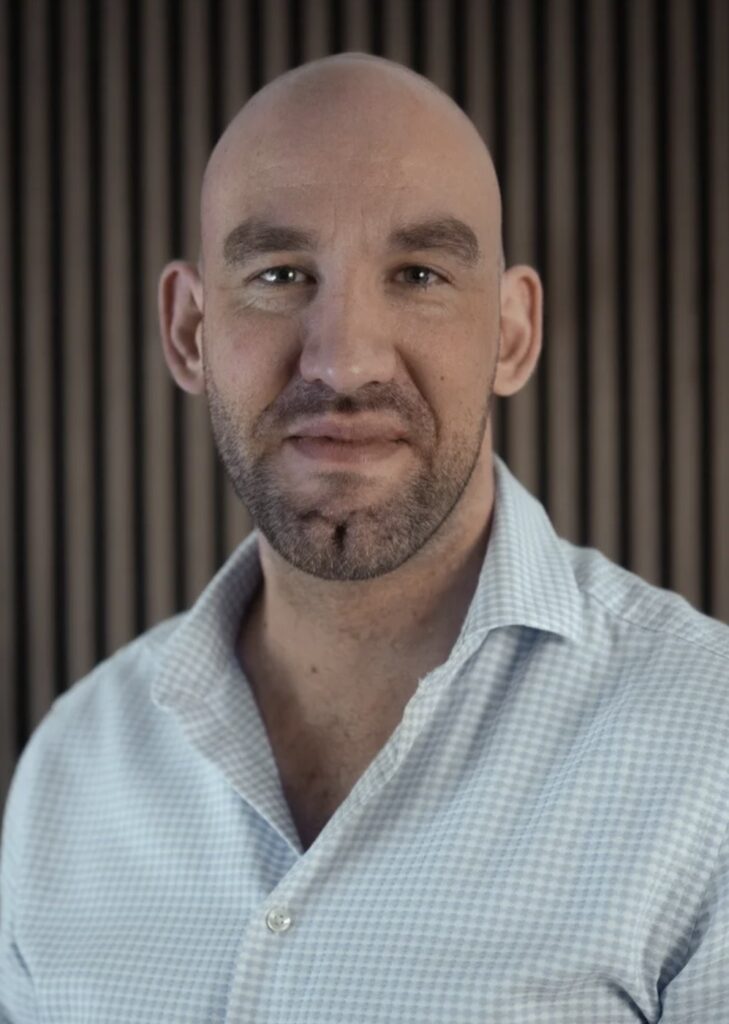
Whether your shoulder aches when you reach up, stiffens so it’s hard to get dressed, keeps you awake at night, or your elbow hurts when you grip, shoulder and elbow pain can get in the way of everyday life. I’m Robert Green, a GOsC-registered osteopath (no. 11480) at our Overton clinic. Call me on 01256 578137 if you’d rather talk first.
- Free 15-minute consultation, in person or by telehealth call, before you book
- £60 for 45 minutes, pay as you go
- Free parking at the clinic
On this page: what shoulder and elbow pain can feel like, what can cause it, your first appointment, what you can do yourself for a painful or stiff shoulder and an aching elbow, and when to get help straight away.
Jump to a section
- Shoulder and elbow pain an osteopath may help with
- What shoulder and elbow pain can feel like
- About shoulder and elbow pain
- What happens at your first appointment
- Looking after yourself in the meantime
- Visiting us at our Overton clinic
- Shoulder and elbow pain questions
- Related pages
- Book an appointment
- When to get help straight away
Shoulder and elbow pain an osteopath may help with
Shoulder pain: osteopathy may help, and everyone responds differently. Osteopathy may also help with elbow pain.
This page is about everyday shoulder and elbow pain: the shoulder that aches, stiffens or catches when you lift your arm, and elbow pain linked to the neck or back. If you’ve injured your shoulder or arm and it looks out of place, or you can’t move it, please read when to get help straight away first.
What shoulder and elbow pain can feel like
Shoulder pain is usually felt in the shoulder or upper arm. It may be a dull ache or sharp, and is often worse when you reach up or away from your body, get dressed, lift things or lie on that side.[1] A shoulder can also become stiff, so it’s hard to reach overhead or behind you.[2][3] Elbow pain is often felt on the outside or inside of the elbow and into the forearm, and is worse when you grip, lift or twist, such as opening a jar.[4][5][6]
I think of pain as your body’s alarm system. It’s there to protect you, but how loud it is doesn’t always match what’s going on inside the joint. Even when shoulder pain is severe, it doesn’t usually mean you’ve seriously damaged your shoulder.[1]
About shoulder and elbow pain
Possible causes
Shoulder and elbow pain has lots of possible causes, and often there’s more than one thing going on. Common ones are:
- irritation of the tendons around the shoulder (the rotator cuff), the most common cause of shoulder pain[1]
- a shoulder that becomes painful and stiff over months, sometimes called frozen shoulder[2][3]
- arthritis in the shoulder joint[7][8]
- pain felt in the shoulder that comes from the neck[9][10]
- sore tendons around the elbow, after a lot of gripping, lifting or twisting[4][6]
- Pain on the inside of the elbow, sometimes called golfer’s elbow, comes from the tendons on that side, often after a lot of gripping or lifting, and is most common between 40 and 60.[6]
- bursitis, where a cushioning sac near a joint becomes painful and swollen; it’s most common in the shoulders, hips, elbows and knees[11]
Things that can make shoulder and elbow pain more likely include getting older, doing something your arm isn’t used to or a lot more of it than usual, repetitive overhead work or gripping, a previous injury, diabetes and smoking.[1][3][8][5]
The sections further down look at three common kinds: shoulder pain when you use your arm, a stiff and painful shoulder, and elbow pain linked to the neck or back.
What happens at your first appointment
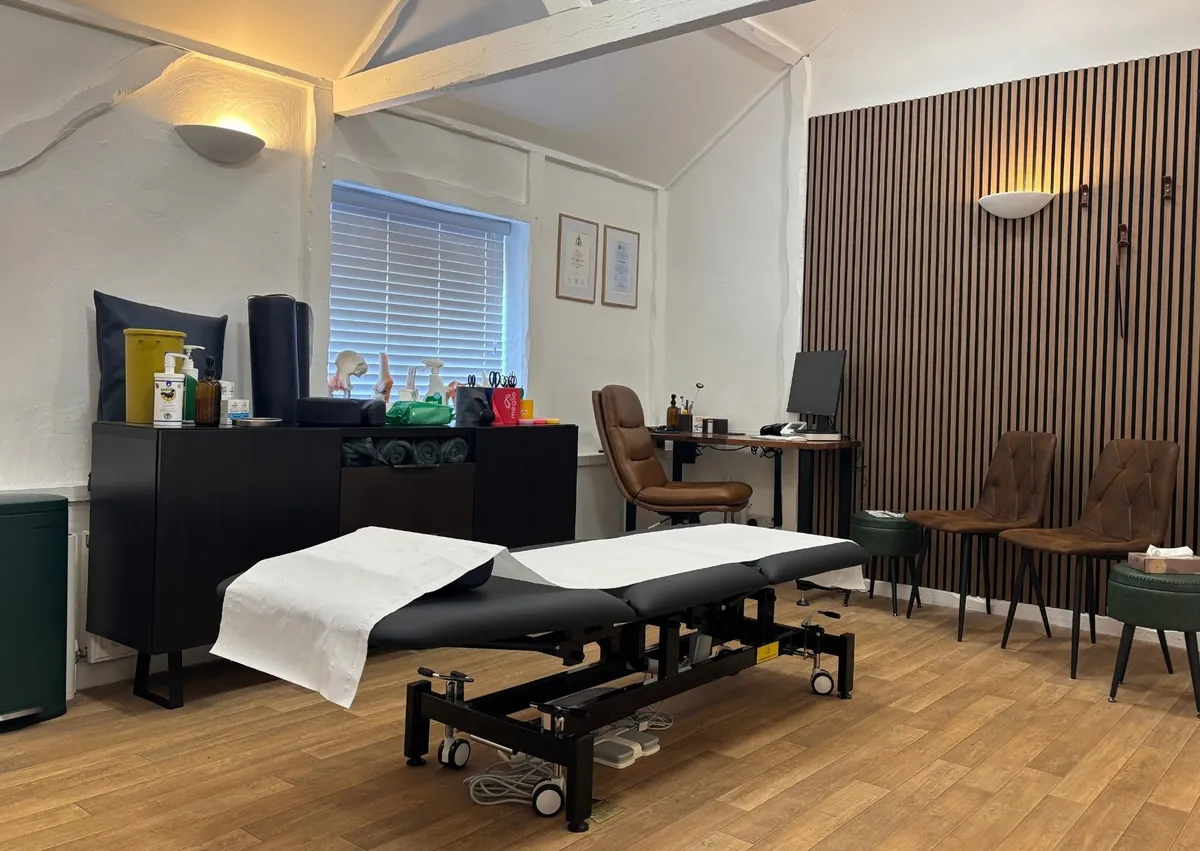
Your first appointment is 45 minutes and costs £60. I ask about your shoulder or elbow and what you’d like to get back to, examine it and watch how you lift, reach and turn your arm. I check your neck and upper back too, because they can play a part. I explain what I think is going on, in plain English, and we agree a plan together. That may include hands-on care, if you agree, and exercises with videos on the Rehab Guru app. If I think you need a scan, an injection or another opinion, I’ll tell you and refer you on (my approach).
You pay as you go and you don’t need a GP referral. A free 15-minute consultation, in person or by telehealth call, is available first. Some people feel sore or achy for a short time after hands-on treatment; I’ll explain what to expect before we start.
Looking after yourself in the meantime
Whatever the cause, a few things help most shoulders and elbows:
- Keep moving gently. Don’t stop using your arm completely, because that can stop it getting better, but for a while avoid the things that make it a lot worse.[7]
- Build up step by step. Start with gentle exercises and avoid forcing movements that cause sharp or increasing pain.[12] Don’t make up your own strenuous exercises or use heavy gym equipment.[7]
- Use a comfort guide. Some mild discomfort during exercise can be normal, as long as it settles afterwards.[12] If your arm is much more sore the next day, you did a bit too much: ease off, then build up again.
- Try heat or cold. Frozen peas wrapped in a tea towel for up to 20 minutes, 3 times a day, or a hot water bottle wrapped in a tea towel for up to 20 minutes, 2 to 3 times a day.[7]
- Sit comfortably. Sit upright with a cushion behind your lower back, and rest your arm on a cushion in your lap.[7]
- Painkillers. If you need something for the pain, ask a pharmacist which tablets or gels are right for you.[7]
A common belief is that a painful shoulder should be kept still. In fact, completely stopping using your shoulder can stop it getting better, so gentle movement matters.[7]
Try this now: stand with one hand resting on a chair and let your other arm hang down. Gently swing it in small circles, about five times. It’s a good warm-up.[13]
About shoulder pain when you use your arm
Possible causes. The most common cause of shoulder pain is irritation of the rotator cuff, the group of muscles and tendons that help lift and control your shoulder.[1] It often starts after doing something your shoulder isn’t used to, or more of it than usual, and sport with a lot of overhead arm movement, such as tennis, swimming or lifting weights, can irritate these tendons.[1][14] There’s more on this on my Minor sports injuries page.
Sometimes pain felt in the shoulder comes from a problem in the neck, rather than the shoulder itself.[9][10] There’s more on this on my Neck pain page.
What it can feel like. Pain in the shoulder or upper arm, which may be dull, aching or sharp; pain when reaching overhead or away from your body, getting dressed or lifting; difficulty sleeping on that side; and the shoulder may feel weak because of the pain.[1]
If you come and see me. If you’d like me to take a look, this is what an appointment involves:
- Check: I ask what changed before it started, and watch how you lift, reach and turn your arm. I check your neck and upper back too, including for signs that something else is going on.
- Explain and plan: what I think is going on, and a plan towards what matters to you.
- Hands-on care, if you agree. You can ask me to stop at any time.
- Exercises: shoulder strength and movement, on Rehab Guru.
Looking after it yourself. Exercises are the main treatment for most people with this kind of shoulder pain.[1] Cut down for a while on the lifting, carrying or overhead jobs that make it a lot worse, but keep moving your shoulder as comfortably as you can.[1] It’s worth sticking with your exercises, even if change is gradual.[12]
Try this now: sitting or standing tall, squeeze your shoulder blades back and together, hold for five seconds, then relax. Repeat 10 times.[13]
When to call me. Call me on 01256 578137 if it’s getting worse, it’s very difficult to move your arm, it’s keeping you awake, or it isn’t settling after a couple of weeks.[7] Call me straight away if the pain came on suddenly and is very bad, or you have pins and needles that don’t go away, or no feeling in your arm or shoulder.[7] If you’ve injured your shoulder and it looks out of place, or you can’t move your arm, read when to get help straight away first.
About a stiff, painful shoulder
Possible causes. A shoulder that slowly becomes painful and stiff over months, sometimes years, may be what’s called a frozen shoulder. The tissue around the shoulder joint becomes inflamed, then thickens and tightens, making it painful and difficult to move your arm.[2][3] It’s often not clear why it happens. It’s more common between the ages of 40 and 65, and more likely if you have diabetes or a thyroid problem, or after an injury, surgery or a spell when you couldn’t move your arm normally.[2][3]
Pain and stiffness that build up gradually can also come from arthritis in the shoulder joint, where the cartilage gets thinner and the joint surfaces rougher; it becomes more common from around the age of 45.[8] There’s more on this on my Arthritic pain page.
What it can feel like. With a frozen shoulder: pain that can be severe and worse at night, stiffness, especially reaching overhead or turning your arm outwards, and trouble sleeping.[3][2] With arthritis: pain and stiffness that slowly get worse, difficulty lifting your arm or getting dressed, and a grinding, clicking or catching feeling.[8] Although it can be very painful, a stiff, painful shoulder isn’t usually a sign of serious damage.[3]
If you come and see me. If you’d like me to take a look, this is what an appointment involves:
- Check: how and when it started, how far you can move your arm and how far I can gently move it for you, and your neck and upper back, including for signs that something else is going on.
- Explain and plan: what I think is going on, and a plan towards what matters to you. If I think you need an injection, a scan or another opinion, I’ll tell you and refer you on.
- Hands-on care, if you agree, gently and within comfort. You can ask me to stop at any time.
- Exercises: gentle movement and strength, on Rehab Guru.
Looking after it yourself. Keep your shoulder moving gently: keeping it still can make the pain worse.[2] Avoid movements that push it to its limit, and find a balance between rest and activity.[3] A heat pack or hot water bottle wrapped in a tea towel, for up to 20 minutes at a time, may ease it.[2] Don’t make up your own strenuous exercises: gym equipment can make the pain worse.[2]
A common belief is that you should push through the pain to free up a stiff shoulder. Gentle movement, within comfort, is the better way.[2][3]
Try this now: sit upright at a table with your hands resting on a tea towel in front of you. Gently slide the towel forwards as far as is comfortable, hold for five seconds, then slide it back. Repeat a few times.[13]
When to call me. Call me on 01256 578137 if the pain is very bad, it’s keeping you awake, your shoulder is getting stiffer, or it isn’t settling. Call me straight away if you develop severe pain and stiffness in both shoulders, so it’s hard to lift both arms above your head.[7][10]
About elbow pain linked to the neck or back
Possible causes. Pain on the outside of the elbow that’s worse when you grip, lift or twist often comes from the tendons there becoming sore and overloaded.[4][5] Despite the name, most people with it have never played tennis: it often follows more manual work, gardening, DIY, or a lot of typing or using a mouse.[5][4] This section is about elbow pain, including tennis elbow, where it’s linked to a neck or back problem, which is why I check your neck and upper back as well as your elbow. There’s more on this on my Neck pain page.
Elbow pain can also come from arthritis, bursitis, or a sprain or strain.[15]
What it can feel like. Pain on the outside of the elbow, which can spread into the forearm; pain when gripping, lifting, bending your arm or moving your wrist; tenderness; and difficulty fully straightening your arm.[4] Some people have stiffness first thing that eases as they move.[5]
If you come and see me. If you’d like me to take a look, this is what an appointment involves:
- Check: where it hurts and what sets it off, and your neck, upper back and shoulder, to see whether they’re linked to your elbow pain. I also look for signs that something else is going on.
- Explain and plan: what I think is going on, and a plan towards what matters to you.
- Hands-on care, if you agree. You can ask me to stop at any time.
- Exercises: graded forearm and grip strength, on Rehab Guru.
Looking after it yourself. For a while, cut down on what makes it worse, such as heavy gripping, lifting or twisting, then build back up gradually.[4][5] You may find it easier to lift things with your palm facing up.[5] A forearm strap or brace from a pharmacy, worn during activity about 2 to 3 finger widths below the bony point of the elbow, may ease the pain.[4][5] A hot or cold pack wrapped in a towel, for up to 20 minutes every 2 to 3 hours, may help too.[4] Improvement is often gradual, so it’s worth sticking with your exercises.[5]
Try this now: rest your forearm on a table, palm down, holding a tin of beans with your hand over the edge. Slowly bend your wrist up towards you, then slowly lower it. Do this 15 times, within comfort.[16]
When to call me. Call me on 01256 578137 if the pain is getting worse, it’s stopping you working or sleeping, or it hasn’t settled after a couple of weeks of doing less of what sets it off.[4] If your elbow is hot, red or swollen and you feel unwell, or you felt a pop while lifting something heavy and the shape of your arm suddenly changed, read when to get help straight away first.[17]
Visiting us at our Overton clinic
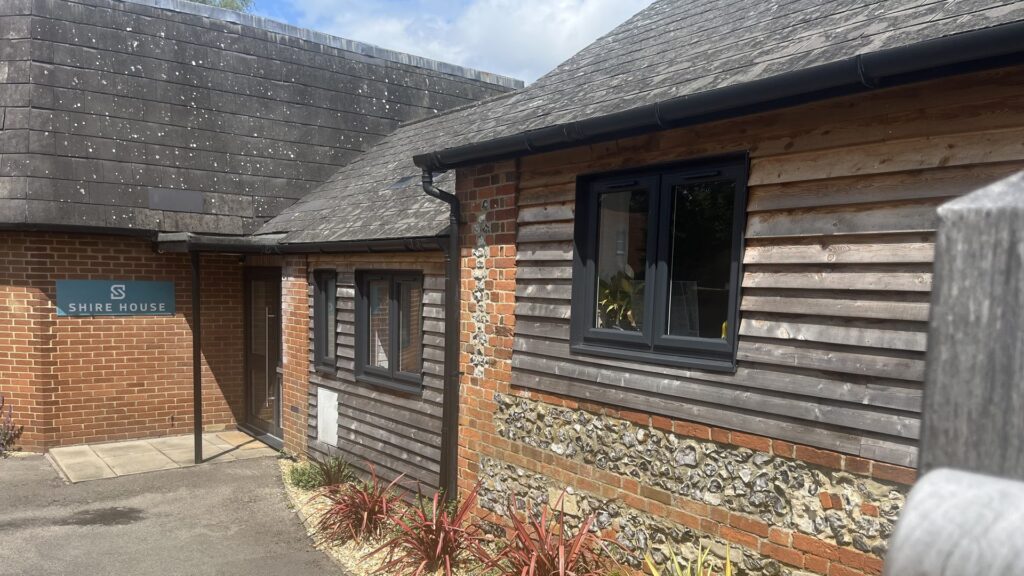
We’re at Shire House, Waltham Road, Overton, Hampshire RG25 3NJ, about 8 miles from Basingstoke, with a free private car park. There’s one small step at the entrance (I’m happy to help), then wide doorways and a wheelchair-accessible toilet. Open Monday to Friday, 9am to 8pm; Saturdays with me by arrangement. Directions and a map.
Pilates with Lucy is also run at the clinic, in 1:1 sessions, if you’d like help to keep moving.
Shoulder and elbow pain questions
Should I rest my shoulder or keep it moving?
Keep it moving gently. Completely stopping using your shoulder can stop it getting better. For a while, avoid what makes it a lot worse, and don’t make up your own strenuous exercises.[7]
If it’s getting worse or not improving, call me on 01256 578137.
Do I need a scan for shoulder or elbow pain?
Often not. Elbow pain on the outside or inside of the elbow can usually be recognised without a scan.[5][6] For the shoulder, I’ll examine you first, and if I think you need a scan or another opinion, I’ll tell you and refer you on.
Why is my shoulder worse at night?
Pain at night is common when a shoulder is stiff and painful, and lying on the sore side often makes it worse.[2][1] If it’s keeping you awake, call me on 01256 578137.
Do I need a GP referral, and where are you?
No referral is needed. An appointment with Robert Green costs £60 for 45 minutes, pay as you go, and a free 15-minute consultation is available first. We’re at Shire House, Waltham Road, Overton RG25 3NJ, about 8 miles from Basingstoke, with free parking. Call 01256 578137 or book online.
Book an appointment
Choose a time that suits you below, or call me on 01256 578137 if you would rather talk first.
When to get help straight away
Call 999 or go to A&E if:
- you’ve injured your shoulder, arm or elbow, including while lifting something heavy, and you can’t move your arm, it looks out of place or has changed shape, you heard a snap, a bone is sticking out, or it’s numb, tingling, has pins and needles or has changed colour: you may have dislocated your shoulder or broken a bone[18][19][15]
- you have chest pain that feels tight or like squeezing, or chest pain that spreads to your arms, neck or jaw, or arm pain that comes on suddenly with pressure, heaviness or squeezing across your chest: you may be having a heart attack[20][15]
Don’t drive yourself to A&E: ask someone to take you, or call 999 and ask for an ambulance. If you have any of these, please don’t wait for an appointment with me.
Call me straight away on 01256 578137 if your shoulder, elbow or arm is hot, red or swollen, and you have a very high temperature, feel hot, cold or shivery, or feel generally unwell.[7][15][21]
Call me straight away on 01256 578137 if you have lost weight without trying and your pain is worse at night.
For anything else, call me on 01256 578137 and I’ll talk it through. I’ll tell you if I think you need urgent medical care.
Sources
- YourPhysio (NHS MSK physiotherapy service). Rotator cuff-related shoulder pain. yourphysio.org.uk. Accessed 13 November 2026.
- NHS. Frozen shoulder. nhs.uk. Accessed 13 November 2026.
- YourPhysio (NHS MSK physiotherapy service). Frozen shoulder. yourphysio.org.uk. Accessed 13 November 2026.
- NHS. Tennis elbow. nhs.uk. Accessed 13 November 2026.
- YourPhysio (NHS MSK physiotherapy service). Tennis elbow. yourphysio.org.uk. Accessed 13 November 2026.
- YourPhysio (NHS MSK physiotherapy service). Golfer’s elbow. yourphysio.org.uk. Accessed 13 November 2026.
- NHS. Shoulder pain. nhs.uk. Accessed 13 November 2026.
- YourPhysio (NHS MSK physiotherapy service). Shoulder osteoarthritis. yourphysio.org.uk. Accessed 13 November 2026.
- MedlinePlus (US National Library of Medicine). Shoulder pain. medlineplus.gov. Accessed 13 November 2026.
- Arthritis UK. Neck pain. arthritis-uk.org. Accessed 13 November 2026.
- NHS. Bursitis. nhs.uk. Accessed 13 November 2026.
- YourPhysio (NHS MSK physiotherapy service). Shoulder pain. yourphysio.org.uk. Accessed 13 November 2026.
- Arthritis UK. Exercises for the shoulders. arthritis-uk.org. Accessed 13 November 2026.
- MedlinePlus (US National Library of Medicine). Rotator cuff problems. medlineplus.gov. Accessed 13 November 2026.
- NHS. Elbow and arm pain. nhs.uk. Accessed 13 November 2026.
- Arthritis UK. Exercises for the elbows. arthritis-uk.org. Accessed 13 November 2026.
- YourPhysio (NHS MSK physiotherapy service). Elbow pain. yourphysio.org.uk. Accessed 13 November 2026.
- NHS. Dislocated shoulder. nhs.uk. Accessed 13 November 2026.
- NHS. Broken arm or wrist. nhs.uk. Accessed 13 November 2026.
- NHS. Heart attack. nhs.uk. Accessed 13 November 2026.
- NHS. Septic arthritis. nhs.uk. Accessed 13 November 2026.
The advice on this page is written by Robert Green, osteopath, in his own words, using these sources.