Hip pain: osteopathy near Basingstoke, at our Overton clinic
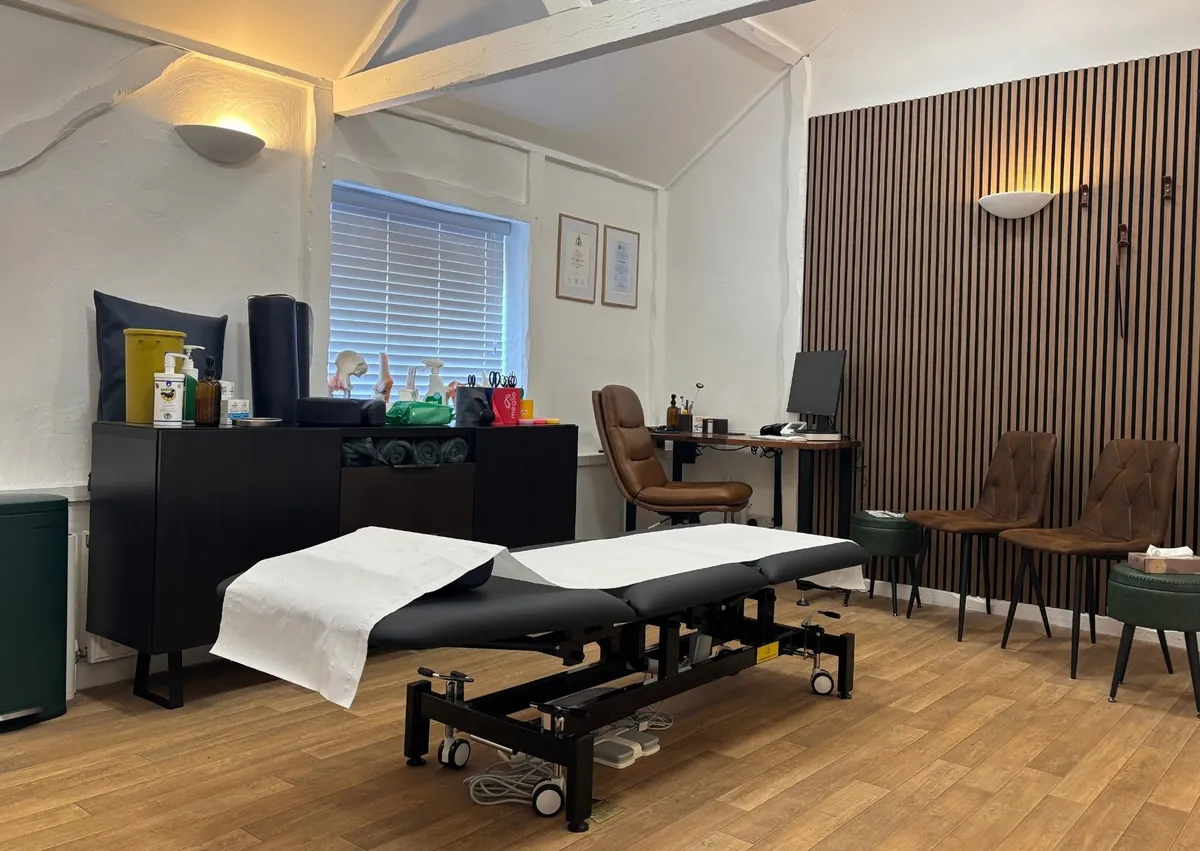
Whether your hip aches when you walk, stiffens up after sitting, keeps you awake when you lie on that side, or you feel it in your groin after sport, hip and groin pain can get in the way of everyday life. I’m Robert Green, a GOsC-registered osteopath (no. 11480) at our Overton clinic. Call me on 01256 578137 if you’d rather talk first.

- Free 15-minute consultation, in person or by telehealth call, before you book
- £60 for 45 minutes, pay as you go
- Free parking at the clinic
On this page: what hip and groin pain can feel like, what can cause it, your first appointment, what you can do yourself for an aching or stiff hip, pain on the outside of the hip and groin pain, and when to get help straight away.
Jump to a section
- Hip pain an osteopath may help with
- What hip and groin pain can feel like
- About hip and groin pain
- What happens at your first appointment
- Looking after yourself in the meantime
- Visiting us at our Overton clinic
- Hip and groin pain questions
- Related pages
- Book an appointment
- When to get help straight away
Hip pain an osteopath may help with
Osteopathy may help with hip pain, and everyone responds differently. Osteopathy may also help with hip pain from osteoarthritis, as an adjunct to core osteoarthritis treatments and exercise.
This page is about everyday hip pain, including pain felt in the groin, which is often where pain from the hip joint itself is felt.[1][2] If you can’t put weight on your leg, or you’ve had a fall or injury and your hip is very painful, please read when to get help straight away first.
What hip and groin pain can feel like
Hip pain can be felt in the groin, the buttock, the outside of the hip or the thigh.[2][3][1] It may be a dull ache, stiffness after sitting or first thing in the morning, or pain when you walk, climb stairs or stand for a long time.[2][3] Some people find it hard to put on their socks and shoes, or to lie on one side at night.[2][3]
I think of pain as your body’s alarm system. It’s there to protect you, but how loud it is doesn’t always match what’s going on inside the joint. X-rays often show changes in the hip in people who have little or no pain, so something seen on a scan isn’t always the cause.[2]
About hip and groin pain
Possible causes
Hip and groin pain has lots of possible causes, and often there’s more than one thing going on. Common ones are:
- osteoarthritis, where the joint surfaces change over time; the hip is one of the joints it affects most often[4][5]
- irritation of the tendons and the small fluid-filled cushions (bursae) on the bony point at the side of the hip, which causes pain on the outside of the hip[3]
- a sprain or strain, after intense or repetitive exercise[6]
- a mild groin strain, where the muscles on the inside of the thigh are overstretched, often in sports with a lot of twisting, turning and kicking[7]
- a hip joint whose shape means the ball and socket meet earlier than usual in some movements, which can cause pain at the front of the hip or in the groin[8]
- a problem in the lower back, with the pain felt in the hip[1]
Things that can make hip pain more likely include getting older, a previous hip injury, a family history of osteoarthritis, carrying extra weight, weaker hip muscles, and doing a lot more than you’re used to.[2][3]
Most hip, groin and thigh problems aren’t caused by anything serious.[9] The sections further down look at three common kinds of hip and groin pain: hip pain from osteoarthritis, pain on the outside of the hip, and groin pain.
What happens at your first appointment
Your first appointment is 45 minutes and costs £60. I ask about your hip and what you’d like to get back to, examine it and watch how you walk, stand on one leg, squat and manage a step. I check your lower back and knee too, because hip pain can come from the back, or be felt down towards the knee.[1][5] I explain what I think is going on, in plain English, and we agree a plan together. That may include hands-on care, if you agree, and exercises with videos on the Rehab Guru app. If I think you need a scan or another opinion, I’ll tell you and refer you on (my approach).
You pay as you go and you don’t need a GP referral. A free 15-minute consultation, in person or by telehealth call, is available first. Some people feel sore or achy for a short time after hands-on treatment; I’ll explain what to expect before we start.
Looking after yourself in the meantime
Whatever the cause, a few things help most hips:
- Keep moving. Complete rest usually doesn’t help. If your hip has flared up, cut back for a while on the things that make it a lot worse, then build back up as it settles.[9]
- Build strength. Gradually strengthening the muscles around your hip can make everyday things easier.[9] Aim for strength exercises on at least 2 days a week, plus activity that gets you a bit out of breath, such as cycling, swimming or brisk walking.[5]
- Use a comfort guide. Some discomfort while you exercise is normal, as long as it settles soon afterwards and doesn’t keep getting worse over the next 24 hours.[9] If your hip is much more sore the next day, you did a bit too much: ease off, then build up again.
- Make life easier on your hip. Wear comfortable, shock-absorbing shoes with a soft sole, and avoid low chairs.[6] A firm chair that’s high enough for your hip to be slightly higher than your knee is easier to get out of, and the handrail helps on the stairs.[5]
- Painkillers. If you need something for the pain, ask a pharmacist which tablets or gels are right for you.[9]
A common belief is that exercise wears out a painful hip. In fact, exercise is one of the main treatments for hip osteoarthritis, and it’s normal for the hip to ache a bit more when you start.[10]
Try this now: stand holding the back of a chair or a kitchen worktop. Lift one leg straight out to the side, hold for five seconds, then slowly lower it. Repeat five times on each side, keeping your body upright.[11]
About hip pain from osteoarthritis
Possible causes. Osteoarthritis is very common, and the hip is the second most commonly affected joint.[5] Your joints are always repairing themselves, and over time the cartilage can get thinner and the joint surfaces rougher.[2] It’s more likely as you get older, if it runs in your family, after a hip injury, or if you’re carrying extra weight.[2] There’s more on this on my Arthritic pain page.
What it can feel like. Pain in the groin, thigh or buttock, stiffness after sitting or first thing in the morning, finding walking, standing or stairs harder, clicking or grinding, and trouble putting on your socks and shoes.[2] It often comes and goes in flare-ups.[2] Some people also feel it from the top of the thigh down to the knee.[5] There’s more on this on my Knee pain page.
If you’re 45 or over and your symptoms fit, you don’t usually need an X-ray or scan to know it’s osteoarthritis.[10]
If you come and see me. If you’d like me to take a look, this is what an appointment involves:
- Check: I ask about your hip and your day, and examine your hip, back and knee and how you walk, including for signs that something else is going on.
- Explain and plan: what I think is going on, and a plan towards what matters to you. Exercise is a core treatment, so it’s at the heart of the plan.[10]
- Hands-on care, if you agree, always alongside exercise, not instead of it.[10] You can ask me to stop at any time.
- Exercises: strength and movement, on Rehab Guru.
Looking after it yourself. Keep going with the steps above. Exercise that strengthens the muscles supporting your hip is one of the best things you can do at home.[5] Pace your jobs: break the harder ones into chunks, with something gentler in between.[5] Swimming and cycling put less load through your hip, and many people find exercising in water easier.[5] Stick with it: keeping your exercises up over the long term adds to their benefits.[10]
Try this now: lie on your back on the bed with your knees bent and your feet flat. Lift your bottom off the bed, hold for five seconds, then lower it slowly. Repeat a few times, within comfort.[11]
When to call me. Call me on 01256 578137 if a flare-up isn’t settling, your hip is getting steadily worse, it’s stopping you sleeping, or it’s stopping you doing things you need to do. If your hip is hot and swollen and you feel unwell, read when to get help straight away.
About pain on the outside of the hip
Possible causes. Pain on the outside of the hip often comes from irritation of the tendons and other soft tissues around the bony point at the side of your hip. The small fluid-filled cushions there, called bursae, can become irritated too, which is why it’s sometimes called hip bursitis, or greater trochanteric pain syndrome.[3] It’s more common in women aged 40 to 60, and more likely with overuse, weaker hip muscles or a fall or bump on the hip.[3]
Pain you feel around the hip can also come from a problem in your lower back, rather than the hip itself.[1] There’s more on this on my Back pain and Sciatica pages.
What it can feel like. Pain on the outside of the hip, which may spread down the outside of the thigh, is often worse lying on that side, and is sore when you press on the bony point. Walking, stairs or standing for a long time can be uncomfortable.[3][6]
If you come and see me. If you’d like me to take a look, this is what an appointment involves:
- Check: I ask what changed in the weeks before it started, check where it’s tender, and watch how you walk, stand on one leg and manage a step. I check your lower back too.
- Explain and plan: what I think is going on, and a plan towards what matters to you, including how you might keep doing the things you enjoy.
- Hands-on care, if you agree. You can ask me to stop at any time.
- Exercises: graded hip strength, on Rehab Guru.
Looking after it yourself. For a while, cut back on whatever really sets it off, while keeping as active as you can.[3] Gradually strengthening your hip muscles is one of the main things I’ll work on with you; some discomfort during these exercises is fine, as long as it settles afterwards.[3] Try not to lie directly on the painful side, and avoid sitting with your legs crossed.[3]
Try this now: tonight, if you sleep on your side, put a pillow between your knees.[3]
When to call me. Call me on 01256 578137 if the pain is getting worse, it’s waking you at night, or it hasn’t started to settle after a few weeks of doing less of what sets it off.
About groin pain
Possible causes. Groin pain can come from the hip joint itself, because that’s often where pain from the hip joint is felt.[1] It can also come from the muscles on the inside of your thigh: in a mild groin strain these muscles are overstretched or slightly torn, most often in sports with a lot of twisting, turning, quick changes of direction and kicking, such as football.[12][7] There’s more on this on my Minor sports injuries page.
Pain at the front of the hip or in the groin, often during or after walking, running, squatting or twisting, can also come from the shape of the hip joint: the ball and socket meet earlier than usual in some movements. This is sometimes called hip impingement (FAI).[8] Many people have these changes in shape without ever having pain.[8]
What it can feel like. With a groin strain: pain on the inside of your thigh that’s tender to press, and pain when you squeeze your knees together; there may be a little swelling or bruising.[7] When it comes from the hip joint: an ache in the groin or at the front of the hip, pain after sitting for a long time, stiffness, and sometimes clicking or catching.[8][2]
If you come and see me. If you’d like me to take a look, this is what an appointment involves:
- Check: how it started, where it hurts and how you move, including your hip and lower back, and whether something else could be going on.
- Explain and plan: what I think is going on, and a plan towards what you want to get back to. If I think you need a scan or another opinion, I’ll tell you and refer you on.
- Hands-on care, if you agree. You can ask me to stop at any time.
- Exercises: movement and strength around your hip and groin, on Rehab Guru.
Looking after it yourself. After a strain, for the first couple of days cut back on whatever makes the pain worse, but try not to stop moving altogether: complete rest usually doesn’t help.[9][7] Once the pain no longer stops you, start gentle exercises to get your hip moving and your groin muscles working again, and build back up to your sport gradually.[7][9] Work into mild discomfort, not pain.[7]
A common belief is that if your hip or groin hurts, it’s being damaged. Pain doesn’t necessarily mean that, and many people can stay active while things settle.[8]
Try this now: sit on a chair with a cushion between your knees. Gently squeeze it for five seconds, then relax. Repeat 5 times, within comfort.
When to call me. Call me if the pain is getting worse, there’s a lot of swelling or bruising, or it isn’t settling. If you notice a lump in your groin, call me on 01256 578137 and I’ll check it. If you have sudden, severe pain in a testicle, or a groin lump that has suddenly become very painful, read when to get help straight away first.
Visiting us at our Overton clinic
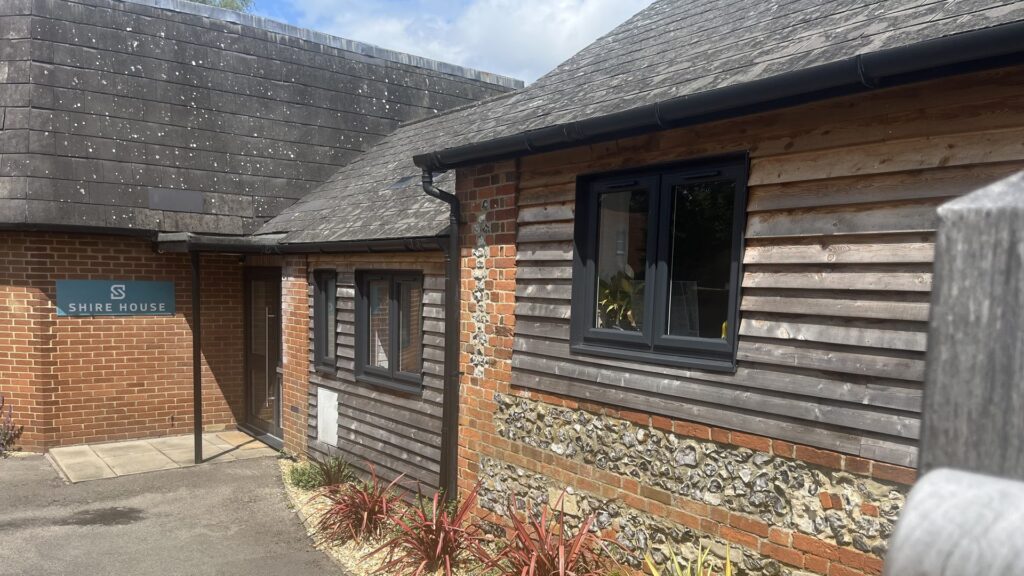
We’re at Shire House, Waltham Road, Overton, Hampshire RG25 3NJ, about 8 miles from Basingstoke, with a free private car park. There’s one small step at the entrance (I’m happy to help), then wide doorways and a wheelchair-accessible toilet. Open Monday to Friday, 9am to 8pm; Saturdays with me by arrangement. Directions and a map.
Pilates with Lucy is also run at the clinic, in 1:1 sessions, if you’d like help to keep moving.
Hip and groin pain questions
Should I rest my hip or keep it moving?
Keep it moving. Complete rest usually doesn’t help. Cut back for a while on what makes it a lot worse, then build back up as it settles.[9]
If it’s getting worse or not improving, call me on 01256 578137.
Do I need a scan for hip pain?
Often not. If you’re 45 or over and your symptoms fit, osteoarthritis can usually be recognised without an X-ray or scan.[10] X-rays often show changes in the hip in people with little or no pain, so something seen on a scan isn’t always the cause.[2] If I think you need one, I’ll tell you and refer you on.
Why does my hip hurt when I lie on my side?
Pain lying on one side is common when the outside of the hip is sore.[3] Try not to lie directly on the painful side, and if you sleep on your side, put a pillow between your knees.[3] If it’s keeping you awake, call me on 01256 578137.
Do I need a GP referral, and where are you?
No referral is needed. An appointment with Robert Green costs £60 for 45 minutes, pay as you go, and a free 15-minute consultation is available first. We’re at Shire House, Waltham Road, Overton RG25 3NJ, about 8 miles from Basingstoke, with free parking. Call 01256 578137 or book online.
Book an appointment
Choose a time that suits you below, or call me on 01256 578137 if you would rather talk first.
When to get help straight away
Call 999 or go to A&E if:
- you’ve had a fall or injury and you have severe hip pain, or you can’t walk or put weight on your leg, or you have tingling or loss of feeling in your hip or leg after an injury: you may have broken your hip[6][13]
- one leg is throbbing, swollen, or red, blue or darkened, and you think you may have a blood clot[14]
- you have sudden chest pain that doesn’t go away, or a painful, swollen leg and you feel short of breath[14][15]
- you have new problems controlling your bladder or bowels, numbness around your genitals or back passage, or changes in sexual function[9]
- you have sudden, severe pain in a testicle[16]
- you have a lump in your groin, or a hernia you know about, that has suddenly become very painful, firm or tender, or won’t go back in, or comes with being sick or not being able to poo or pass wind[17][18]
Don’t drive yourself to A&E: ask someone to take you, or call 999 and ask for an ambulance. If you have any of these, please don’t wait for an appointment with me.
Call me straight away on 01256 578137 if your hip is hot and swollen and you have a very high temperature, feel hot, cold or shivery, or feel generally unwell.[6][19] Call me straight away too if you have severe hip pain that came on suddenly without a fall or injury, or the skin around your hip has changed colour.[6]
Call me straight away on 01256 578137 if you have lost weight without trying and your pain is worse at night.
For anything else, call me on 01256 578137 and I’ll talk it through. I’ll tell you if I think you need urgent medical care.
Sources
- MedlinePlus (US National Library of Medicine). Hip pain. medlineplus.gov. Accessed 13 November 2026.
- YourPhysio (NHS MSK physiotherapy service). Hip osteoarthritis. yourphysio.org.uk. Accessed 13 November 2026.
- YourPhysio (NHS MSK physiotherapy service). Greater trochanteric pain syndrome (GTPS). yourphysio.org.uk. Accessed 13 November 2026.
- NHS. Osteoarthritis. nhs.uk. Accessed 13 November 2026.
- Arthritis UK. Osteoarthritis (OA) of the hip. arthritis-uk.org. Accessed 13 November 2026.
- NHS. Hip pain in adults. nhs.uk. Accessed 13 November 2026.
- Leeds Community Healthcare NHS Trust. Groin strain. leedscommunityhealthcare.nhs.uk. Accessed 13 November 2026.
- YourPhysio (NHS MSK physiotherapy service). Femoroacetabular impingement (FAI). yourphysio.org.uk. Accessed 13 November 2026.
- YourPhysio (NHS MSK physiotherapy service). Hip, groin and thigh pain. yourphysio.org.uk. Accessed 13 November 2026.
- NICE. Osteoarthritis in over 16s: diagnosis and management (NG226), recommendations. nice.org.uk. Accessed 13 November 2026.
- Arthritis UK. Exercises for the hips. arthritis-uk.org. Accessed 13 November 2026.
- NHS. Sprains and strains. nhs.uk. Accessed 13 November 2026.
- NHS. Broken hip. nhs.uk. Accessed 13 November 2026.
- NHS. DVT (deep vein thrombosis). nhs.uk. Accessed 13 November 2026.
- NHS. Chest pain. nhs.uk. Accessed 13 November 2026.
- NHS. Testicle pain. nhs.uk. Accessed 13 November 2026.
- NHS. Femoral hernia. nhs.uk. Accessed 13 November 2026.
- NHS Borders (Right Decisions referral help toolkit). Hernia. rightdecisions.scot.nhs.uk. Accessed 13 November 2026.
- NHS. Septic arthritis. nhs.uk. Accessed 13 November 2026.
The advice on this page is written by Robert Green, osteopath, in his own words, using these sources.