Sciatica treatment in Overton, near Basingstoke
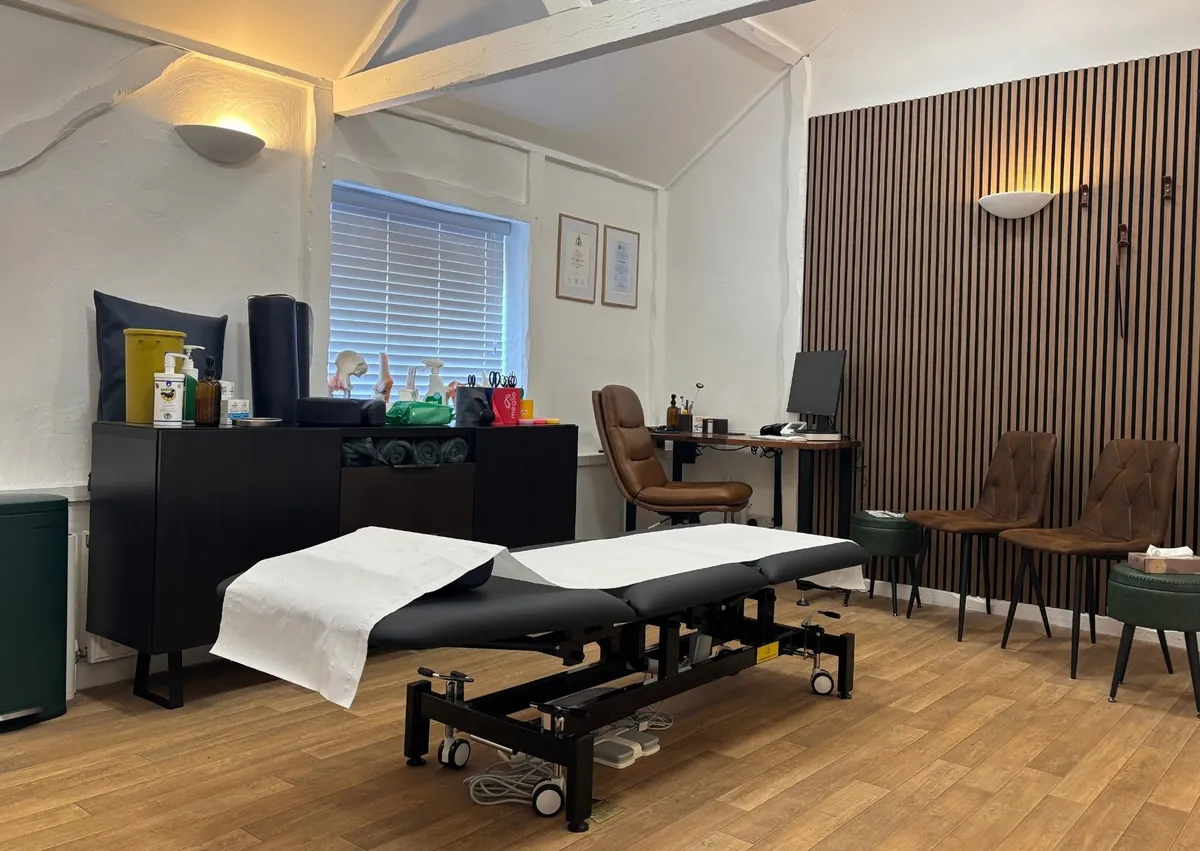
If pain is travelling from your back or bottom down your leg, you may be looking for sciatica treatment near Basingstoke. I’m Robert Green, a GOsC-registered osteopath (no. 11480) at our Overton clinic. Call me on 01256 578137 if you would rather talk.

- Free 15-minute consultation, in person or by telehealth call, before you book
- £60 for 45 minutes, pay as you go
- Free parking at the clinic
On this page: what sciatica is, how I may help, your first appointment, self-help and urgent signs.
What is sciatica?
Sciatica is pain caused by the sciatic nerve, which runs from your lower back to your feet, being irritated or compressed.[1] It usually affects your bottom and the back of one leg, with sharp or burning pain, tingling, numbness or weakness.
The most common cause is what’s often called a slipped disc, though that’s a misleading name.[1] A disc can’t actually slip out of place, because it’s firmly bonded to the bones above and below it.[6] What can happen is that the soft cushion of tissue between the bones in your spine bulges outwards (also called a prolapsed or herniated disc) and can press on or trap a nearby nerve root.[7] There are a few other possible causes.[1] I can’t tell which applies to you from a web page; if I think you need further tests, I will tell you and refer you on.
There’s more on other nerve pain in the leg on my Nerve pain page.
How an osteopath may help with sciatica
Osteopathy may help with sciatica, the leg pain that can come from an irritated nerve in the lower back, often caused by a disc bulging and pressing on the nerve root (sometimes called a slipped disc, though discs can’t actually slip). Everyone responds differently. What I do depends on what I find:
- Assessment. I ask about your symptoms and health, look at how you move and do simple tests. If I think you need further medical investigation, I will say so and refer you on.
- Explanation. I explain what I think is going on, in plain English, and we agree a plan.
- Hands-on treatment, if you agree. This may include soft-tissue work, mobilisation and, where suitable, manipulation (my approach). You can ask me to stop at any time.
- Exercise advice. I will suggest exercises to suit you.
What happens at your first appointment
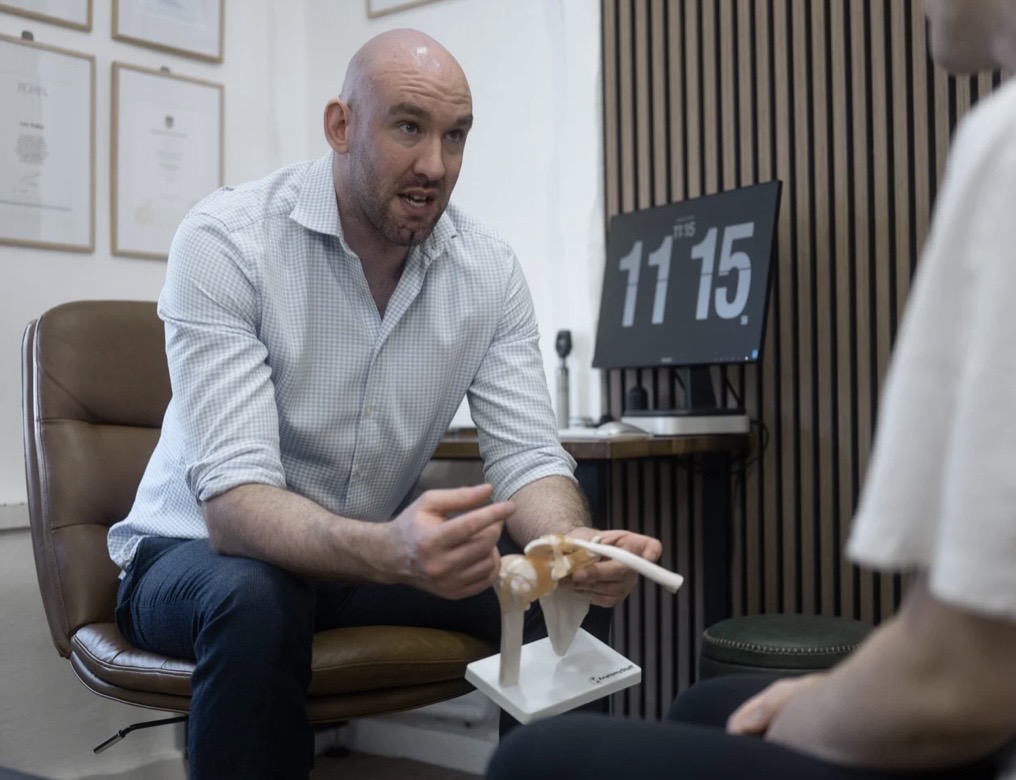
A full appointment is 45 minutes and costs £60: your story, an examination, an explanation, treatment if appropriate and you agree, and a plan. Pregnant women are welcome. A free 15-minute consultation comes first if you want one. You pay as you go and you don’t need a GP referral. More on fees and booking.
Some people feel sore or achy for a short time after hands-on treatment. I will explain what to expect before we start, and you can call me if you are worried.
Looking after yourself in the meantime
Stay as active as you can, try gentle exercise and heat packs, and ask a pharmacist about painkillers. Try not to sit or lie down for long periods.[1] Not sure what’s right for you? Call me on 01256 578137.
Short, frequent walks and changing position
Carry on with your normal activities as much as possible, and try not to sit or lie down for long periods.[1] Short, frequent walks may be a simple way to start, and getting up to change position often may suit you if sitting is uncomfortable. You may need short rests between tasks.[5] If your pain gets worse or spreads further down your leg, call me on 01256 578137.
Gentle sciatica exercises and stretches
Start gentle exercise as soon as you can, and try regular exercises for sciatica.[1] There’s a video of gentle exercises on the Exercises for sciatica problems page. Build up slowly, and read the safety information on that page before you start.
Getting comfortable
Some people find lying on their side with a pillow between their knees comfortable. These are things to try, not rules, and everyone is different.
Heat and pain relief at home
You can hold heat packs, which you can buy from pharmacies, to the painful areas.[1] A heat pack, or a hot water bottle wrapped in a tea towel, is one option. Ask a pharmacist about painkillers for sciatica.
Visiting us at our Overton clinic
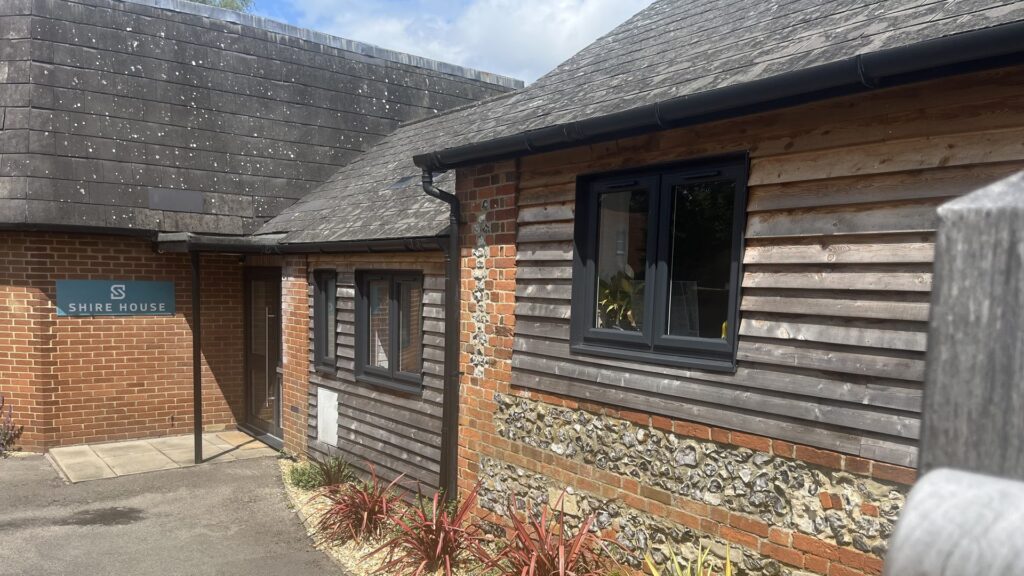
Our sciatica treatment is at Shire House, Waltham Road, Overton, Hampshire RG25 3NJ, about 8 miles from Basingstoke. Patients also come from Whitchurch, North Waltham, Oakley and Andover. Free parking, including an accessible bay. Wheelchair accessible, with a small step at the entrance. Open Monday to Friday, 9am to 8pm; Saturdays with me by arrangement. Directions and a map.
Sciatica questions
Can an osteopath help with sciatica?
Yes, osteopathy may help with sciatica. At Overton and North Waltham Osteopathy, Robert Green, a GOsC-registered osteopath, assesses how you move, explains what he thinks is going on, and agrees a plan with you that usually includes exercises and hands-on care.
What are the symptoms of sciatica?
Sciatica usually affects the bottom and the back of one leg, often including the foot and toes. It can feel like sharp or burning pain, tingling, numbness or weakness, and it may be worse when you move, sneeze or cough.[1] If you only have back pain, it is probably not sciatica. Sciatica on both sides is one of the warning signs listed at the bottom of this page.
Which gentle exercises might help with sciatica?
Start gentle exercise as soon as you can, and try regular exercises for sciatica.[1] The Exercises for sciatica problems page has a video of gentle exercises, with safety information to read first. If your pain gets worse or spreads further down your leg, call me on 01256 578137.
Is walking good for sciatica?
Start gentle exercise as soon as you can. Anything that gets you moving may help, and try not to sit or lie down for long periods.[1] Short, frequent walks may be a simple way to start. If walking makes your pain get worse or spread further down your leg, call me on 01256 578137.
What sleeping position may be comfortable with sciatica?
There isn’t one sleeping position that suits everyone with sciatica. Some people find lying on their side with a pillow between their knees comfortable. Try not to sit or lie down for long periods, so changing position may suit you.[1] If you are unsure, call me on 01256 578137.
When should I get urgent help for sciatica?
The signs that need urgent medical help are listed in the urgent help section at the bottom of this page. For anything else that worries you, call Rob on 01256 578137.
Is a slipped disc the same as sciatica?
No, and “slipped disc” is a misleading name. A disc can’t actually slip out of place, because it’s firmly bonded to the bones above and below it.[6] What can happen is that the soft cushion of tissue between the bones in your spine bulges outwards (also called a prolapsed or herniated disc) and can press on or trap a nearby nerve root.[7] If that’s the sciatic nerve, you can get sciatica: pain, tingling or numbness, usually in your bottom and the back of one leg.[1] So a slipped disc is one cause of sciatica, not another name for the leg pain.
Do I need a GP referral to see an osteopath for sciatica?
No. You can book directly with Overton and North Waltham Osteopathy without a GP referral. An appointment with Robert Green costs £60 for 45 minutes, pay as you go. A free 15-minute consultation, in person or by telehealth call, is available first. Call 01256 578137 or book online.
Where can I see an osteopath for sciatica near Basingstoke?
Overton and North Waltham Osteopathy is at Shire House, Waltham Road, Overton RG25 3NJ, about 8 miles from Basingstoke. Patients also come from Whitchurch, North Waltham, Oakley and Andover. Appointments are Monday to Friday, 9am to 8pm, with Saturdays by arrangement. Parking is free. Call 01256 578137.
Book an appointment
Choose a time that suits you below, or call me on 01256 578137 if you would rather talk first.
When to get help straight away
Call 999 or go to A&E if you have back pain or sciatica and:
- your sciatica is on both sides, or you have weakness or numbness in both legs that is severe or getting worse
- you have numbness around or under your genitals, or around your bottom
- it is hard to start peeing, you cannot pee or control it, or you cannot control your poo or do not notice you need one, and this is not normal for you
- how your genitals feel during sex has changed, or you cannot get or keep an erection, or cannot orgasm
- you have chest pain
- it started after a serious accident, such as a car accident
Cauda equina syndrome is when the nerves at the bottom of your spine become compressed.[3] The first four signs above can be signs of it,[3][4] and any of the signs above could mean another serious back problem.[1][2] Either way, you need urgent hospital care.[1] Don’t drive yourself: ask someone to drive you, or call 999 and ask for an ambulance. Take any medicines you’re on with you.[1]
Optional: a printable cauda equina warning card from the Musculoskeletal Association of Chartered Physiotherapists (MACP).
If you have any of these signs, please don’t wait for an appointment with me. If anything else is worrying you, call me on 01256 578137 or book online and I will talk it through. I will tell you if I think you need urgent medical care.
Call me straight away on 01256 578137 if you have back pain or sciatica and you’ve lost weight without trying to, and the pain is worse at night.
Sources
- NHS. Sciatica. Accessed 19 November 2026.
- NHS. Back pain. Accessed 19 November 2026.
- NHS. Ankylosing spondylitis: Complications (cauda equina syndrome section; the NHS has no separate cauda equina page; page last reviewed 5 January 2023). Accessed 19 November 2026.
- GIRFT (NHS England). Spinal Surgery: National Suspected Cauda Equina Syndrome (CES) Pathway, February 2023. Accessed 19 November 2026.
- YourPhysio. Low back pain. Accessed 19 November 2026.
- North Bristol NHS Trust. Information for patients undergoing cervical (neck) surgery. Accessed 20 November 2026.
- NHS. Slipped disc. Accessed 20 November 2026.
The advice on this page is written by Robert Green, osteopath, in his own words, using these sources.