Nerve pain (neuralgia) treatment in Overton, near Basingstoke
If pain is shooting down your leg, or you have a burning or shooting pain in your arm or hand, you’ll know how much nerve pain can wear you down, day and night. I’m Robert Green, a GOsC-registered osteopath (no. 11480) at our Overton clinic. Call me on 01256 578137 if you’d rather talk first.

- Free 15-minute consultation, in person or by telehealth call, before you book
- £60 for 45 minutes, pay as you go
- Free parking at the clinic
On this page: what nerve pain can feel like, what can cause it, your first appointment, what you can do yourself, nerve pain in the leg or foot, nerve pain in the arm or hand, and when to get help straight away.
Nerve pain an osteopath may help with
Osteopathy may help with neuralgia (nerve pain) and sciatica.
Osteopathy may help with nerve pain that travels from the neck into the arm (cervical radiculopathy).
Osteopathy may help with carpal tunnel syndrome, a type of nerve pain caused by a trapped nerve at the wrist.
Everyone responds differently, so I’ll always talk you through what to expect.
This page is for pain that comes from a nerve, sometimes with tingling or numbness: pain that shoots from your back down your leg, or from your neck into your arm, or a burning pain in a hand or foot. If you have numbness around your bottom or genitals, problems peeing or pooing, or your face or one side of your body has suddenly gone weak, please read when to get help straight away first.
What nerve pain can feel like
Nerve pain often feels different from an aching muscle or a sore joint. People describe it as burning, stabbing or shooting, and it can come with tingling like pins and needles, numbness or weakness.[1][2] It tends to follow the path of the nerve, so pain from your lower back can travel down your leg into your foot, and pain from your neck can spread into your shoulder, arm or hand.[2][3] It may be worse when you move, sneeze or cough,[2] and some kinds are worse at night.[4]
Brief pins and needles after you’ve sat or slept on an arm or leg is normal and goes within a few minutes.[5] It’s worth getting checked if it keeps coming back or doesn’t go away.[5]
I think of pain as your body’s alarm system. Sometimes that alarm becomes more sensitive and overprotective, so everyday movements hurt more than they need to, and it doesn’t always mean there’s damage.[6] Sleep, stress and how much you move can all turn it up or down.[6] Nerves often take longer to settle than muscles or joints, so nerve pain may ease gradually over several weeks or months.[3]
About nerve pain
Possible causes
Nerve pain happens when a nerve is squeezed, irritated or damaged somewhere along its path from your spine out to your hands and feet.[1][2] Often it’s one nerve being pressed on in a tight spot, sometimes called a trapped or entrapped nerve. Things that can play a part include:
From your lower back into your leg. Sciatica is leg pain that can come from an irritated nerve in the lower back, often caused by a disc bulging and pressing on the nerve root (sometimes called a slipped disc, though discs can’t actually slip).[2][7][25][26] Less often, it’s from a narrowing of the space the nerves pass through, or a back injury.[2]
From your neck into your arm. A trapped nerve in the neck, called cervical radiculopathy, is when one of the nerves in your neck becomes irritated or squeezed. It can cause pain that starts in the neck and travels into the shoulder, arm or hand, often with pins and needles or numbness. Age-related changes in the spine or a bulging disc are common causes.[3] A disc can bulge and press on a nerve; it can’t actually slip out of place.[25]
If your neck itself is stiff or sore, there’s more on my Neck pain page.
At the wrist. Carpal tunnel syndrome is pressure on a nerve as it passes through a narrow tunnel in your wrist. It causes tingling, numbness and pain in your hand and fingers, often worse at night, and sometimes a weak thumb or trouble gripping. It’s more likely if you’re pregnant, have diabetes or arthritis, or your work or hobbies mean a lot of gripping or vibrating tools.[4]
At the elbow. Cubital tunnel syndrome is pressure on the nerve that runs past your “funny bone” on the inside of the elbow. It causes pins and needles or numbness, mainly in the ring and little fingers, and it’s more likely if you keep your elbow bent for long spells, lean on it a lot, or have hurt that elbow before.[8]
If your shoulder or elbow itself aches or feels stiff, there’s more on my Shoulder and elbow pain page.
In the thigh. Meralgia paraesthetica is a painful, numb or tingling patch on the outside of the thigh, from a nerve that gets trapped in the groin. Recent weight gain or pregnancy is the commonest reason, and tight clothes around the waist can make it worse.[9][10]
If your hip or groin itself aches or feels stiff, there’s more on my Hip and groin pain page.
In the foot. Morton’s neuroma is a thickening of tissue around a nerve between the toes, usually the 3rd and 4th. It feels like a shooting, stabbing or burning pain, or like a pebble under your foot, and tight or high-heeled shoes make it worse.[11][12] Tarsal tunnel syndrome is pressure on a nerve as it passes the inside of your ankle. It can cause pain, burning, tingling or numbness in the sole of your foot, and it’s more likely if you have flat feet.[13]
If your foot or ankle itself aches or feels stiff, there’s more on my Foot and ankle pain page.
After shingles, or in the face. Post-herpetic neuralgia is long-lasting pain after shingles, in the area where the rash was. It can be an aching, burning or sharp pain, and the skin can become very sensitive to a light touch or a change in temperature. It usually gets better gradually, though that can take anywhere from a few months to over a year.[14] Trigeminal neuralgia is sudden, severe attacks of sharp, shooting pain in the face, often like an electric shock in the jaw, teeth or gums, usually on one side. Attacks last from a few seconds to about 2 minutes and can be set off by a light touch, such as washing your face, eating or brushing your teeth. It’s thought to be rare, and it’s usually caused by a blood vessel pressing on the nerve inside the skull.[15][16] These two are medical conditions that usually need medicines from a doctor, not osteopathy, so if either sounds like you, call me on 01256 578137 and I’ll refer you on.[14][15]
Nerve pain from a wider cause. Sometimes the nerves in your hands and feet are affected more generally, called peripheral neuropathy. In the UK, diabetes is the most common cause. Others include shingles, some medicines, drinking too much alcohol and an injury to a nerve.[1] Low vitamin B12 can also cause pins and needles.[17] This kind usually starts in the feet, in both feet rather than one.[1]
This kind of nerve pain needs medical care to find and treat the cause, so if it sounds like you, call me on 01256 578137 and I’ll refer you on.
The sections further down look at nerve pain in the leg or foot, and in the arm or hand.
What happens at your first appointment
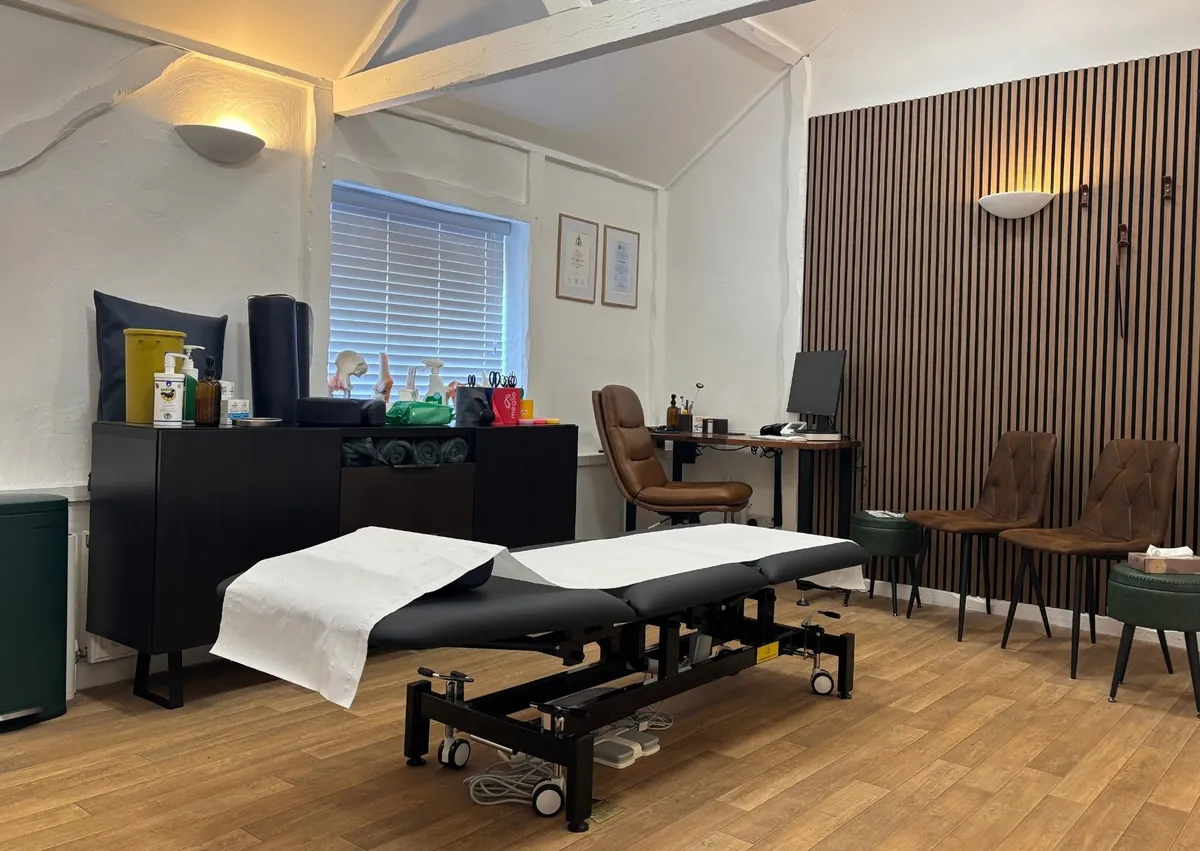
Your first appointment is 45 minutes and costs £60. I ask where the pain starts and where it travels, whether you have tingling, numbness or weakness, what makes it better or worse, how you’re sleeping, any medicines and health conditions such as diabetes, and what you’d like to get back to. I watch how you move, check the joints and muscles along the path of the nerve, and test your strength, reflexes and feeling, so I can work out where the nerve may be irritated. I explain what I think is going on, in plain English, and we agree a plan together. That may include hands-on care, if you agree, such as soft-tissue work and mobilisation, always alongside exercises, not instead of them,[18] with videos on the Rehab Guru app. You can ask me to stop at any time. If I think something needs further medical investigation, I’ll tell you and refer you on (my approach).
I qualified with a BOst (Hons), I’m registered with the General Osteopathic Council, and I’m studying for an MSc in Clinical Pain Management.
You pay as you go and you don’t need a GP referral. A free 15-minute consultation, in person or by telehealth call, is available first. I also offer video appointments through Cliniko, and home visits, priced by visit, which can help if sitting in the car is painful. Patients aged 8 and over are welcome, and so are pregnant women. I can see patients covered by AXA Health, Aviva, WPA, Vitality, Allianz, Medicash and Cigna: please check your policy first. More on fees and booking. Some people feel sore or achy for a short time after hands-on treatment; I’ll explain what to expect before we start, and you can call me if you’re worried.
Looking after yourself in the meantime
A few things help most kinds of nerve pain:
- Keep moving. Carry on with your normal activities as much as you can, and start gentle exercise as soon as you can. Even if moving hurts, it isn’t harmful.[2]
- Change position often. Try not to sit or lie down for long periods, and find a balance between moving and resting.[2][3]
- Warmth. A heat pack on the painful area can ease it for a while. Wrap it in a towel so it isn’t straight on your skin.[2][3]
- Ease off what brings it on. Cut down for a while on whatever sets it off, such as gripping hard, using vibrating tools, leaning on your elbows or wearing tight shoes, rather than stopping everything.[4][8][11]
- Painkillers. Ordinary painkillers often don’t work well for nerve pain, so ask a pharmacist which ones are right for you.[1][2]
Try this now: if you’ve been sitting for a while, get up and walk around for a couple of minutes, then carry on. Little and often is the aim.[2]
About nerve pain in the leg or foot
What it can feel like. Sharp or burning pain down the back of one leg, often into the foot and toes, sometimes with pins and needles, numbness or weakness.[2] Or a burning, stabbing or shooting pain in your thigh or foot.[1]
If you come and see me. If you’d like me to take a look, this is what an appointment involves:
- Check: I ask where the pain goes and what sets it off, watch how you walk and move, and check your back, hips, legs and feet, and the feeling, strength and reflexes in your legs.
- Explain and plan: what I think is going on, and a plan to keep you moving, including how to keep doing what you need to.
- Hands-on care, if you agree, alongside exercise, not instead of it. You can ask me to stop at any time.
- Exercises: gentle movement you can do at home, on Rehab Guru.
Looking after it yourself. With pain down the leg, keep active, little and often, and try not to sit for long spells.[2] With a sore, numb patch on the thigh, wear loose clothes and avoid tight belts around your waist.[10] With pain in the ball of your foot, wear wide, comfortable shoes with a low heel and a soft sole, try soft insoles or pads, and cut down on running and jumping for a while.[11][12] With burning in the sole and flat feet, an insole may help take pressure off the nerve.[13]
Try this now: next time you’re sitting, take your shoes off and slowly circle each ankle 5 times each way, then point and flex your feet 10 times.
When to call me. Call me on 01256 578137 if the pain hasn’t eased after a few weeks, it’s getting worse, or it’s stopping you doing your normal activities.[2] Call me too if the pain in your foot is severe, or you have tingling, weakness or numbness in your foot.[11]
About nerve pain in the arm or hand
What it can feel like. Pain that starts in the neck and travels into your shoulder, arm or hand, or pain around your shoulder blade, often with pins and needles or numbness.[3] Or tingling, numbness and pain in your hand and fingers that’s often worse at night, from a trapped nerve at the wrist,[4] or a burning, stabbing or shooting pain in your hand or fingers.[1]
If you come and see me. If you’d like me to take a look, this is what an appointment involves:
- Check: I ask where the pain and tingling go and when they come on, watch how you move, and check your neck, shoulders, elbows, wrists and hands, and the feeling, strength and reflexes in your arms.
- Explain and plan: what I think is going on, and a plan that fits your work and day.
- Hands-on care, if you agree, alongside exercise, not instead of it. You can ask me to stop at any time.
- Exercises: gentle neck, arm and hand movements, on Rehab Guru.
Looking after it yourself. With pain from the neck, keep moving, use whichever pillow lets you sleep most comfortably, and build up gentle activity such as walking or swimming.[3] If tingling in your hand wakes you at night, a wrist splint worn at night keeps your wrist straight and takes pressure off the nerve. You may need to wear it for up to 6 weeks before it starts to feel better, and you can buy one from a pharmacy.[4] If it’s your ring and little fingers, try not to lean on your elbow or keep it bent for long, such as on the phone, and take regular breaks from repetitive tasks.[8]
Try this now: if you’re on the phone a lot, switch to a headset or speakerphone so your elbow isn’t bent for long spells.[8]
When to call me. Call me on 01256 578137 if your symptoms are getting worse or not going away, or the things you’re doing at home aren’t helping.[4] Call me too if your arm or hand feels weaker, or you’re finding fiddly jobs like buttons harder.[3][8]
Visiting us at our Overton clinic
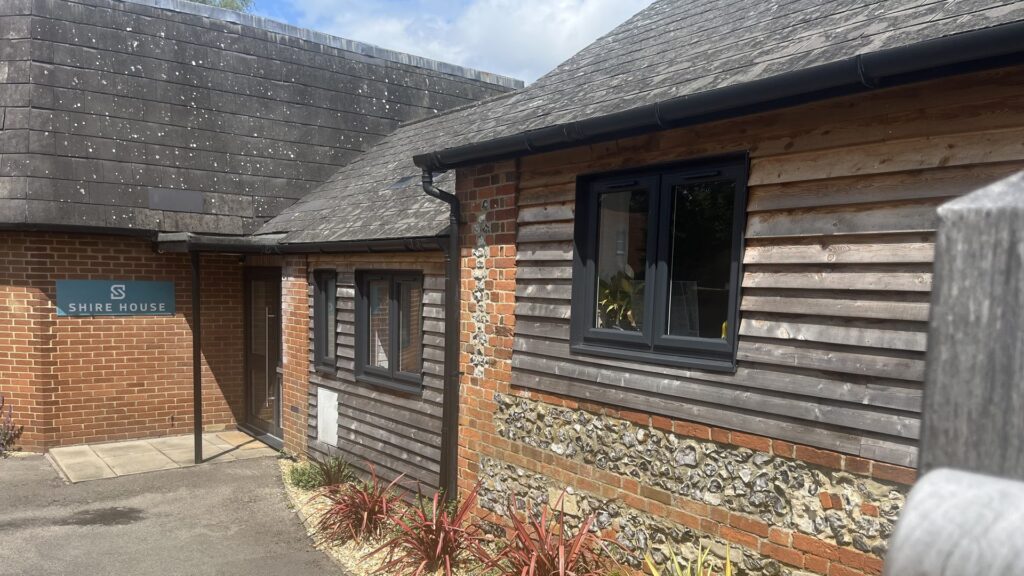
If you’re looking for an osteopath for nerve pain near Basingstoke, we’re at Shire House, Waltham Road, Overton, Hampshire RG25 3NJ, about 8 miles from Basingstoke, with a free private car park outside. There’s one small step at the entrance (I’m happy to help), then wide doorways and a wheelchair-accessible toilet. Open Monday to Friday, 9am to 8pm; Saturdays with me by arrangement. Hannah Lawrence also sees clients every other Sunday, 9am to 12 noon, and on Wednesday evenings. Directions and a map.
Nerve pain questions
What does nerve pain feel like?
It’s often burning, stabbing or shooting, sometimes with pins and needles, numbness or weakness.[1][2] It tends to follow the path of the nerve, such as from your back down your leg, or from your neck into your arm.[2][3] If it’s in both legs, or you have numbness around your bottom or genitals, read when to get help straight away.
How long does nerve pain last?
It depends on the cause. Sciatica usually gets better in a few weeks to a few months, but can last longer.[2] Most people with nerve pain from the neck find it settles within 6 to 12 weeks.[3] Pressure on a nerve at the wrist can take months.[4] If it isn’t settling, or it’s getting worse, call me on 01256 578137.
Should I rest or keep moving with nerve pain?
Keep moving as much as you can. Carry on with your normal activities and try not to sit or lie down for long periods: even if moving hurts, it isn’t harmful.[2] Cut down for a while on anything that clearly sets it off.[4][8] If you’re not sure what’s safe, call me on 01256 578137.
Do I need a scan for nerve pain?
Usually not. In most cases an MRI scan doesn’t change the treatment,[3] and pressure on a nerve at the wrist can usually be recognised from your symptoms and by checking your hand.[4] If I think you need a scan or nerve tests, I’ll tell you and refer you on.
Where can I see an osteopath for nerve pain, and do I need a referral?
Overton and North Waltham Osteopathy is at Shire House, Waltham Road, Overton RG25 3NJ, about 8 miles from Basingstoke. You don’t need a GP referral. An appointment with Robert Green costs £60 for 45 minutes, pay as you go, and a free 15-minute consultation is available first. Patients aged 8 and over are welcome. Call 01256 578137 or book online.
Book an appointment
Choose a time that suits you below, or call me on 01256 578137 if you would rather talk first.
When to get help straight away
Call 999 or go to A&E if:
- you have sciatica on both sides, or pain, tingling, weakness or numbness in both legs that is severe or getting worse[2][19]
- you have numbness around or under your genitals, or around your bottom[2]
- it’s hard to start peeing, you can’t pee or control it, or you can’t control your poo or don’t notice you need one, and this isn’t normal for you[2]
- how your genitals feel during sex has changed, or you can’t get or keep an erection, or can’t orgasm[19][20]
- you have new weakness in both arms or both legs[3]
- you have chest pain, or arm pain that came on suddenly with pressure, heaviness or squeezing across your chest[21][22]
- one side of your face suddenly droops or goes numb, you can’t lift both arms and keep them there, your speech is slurred, or one side of your body suddenly goes weak or numb: these can be signs of a stroke[23]
- it started after a serious accident, such as a car accident[19]
Cauda equina syndrome is when the nerves at the bottom of your spine become compressed.[24][20] The first four signs above can be signs of it.[20] Any of the signs above needs urgent hospital care.[2] For a stroke, call 999 straight away, even if the signs have stopped, and don’t drive yourself to A&E.[23] For the other signs, don’t drive yourself: ask someone to take you, or call 999 and ask for an ambulance. Take any medicines you’re on with you.[2]
If you have any of these, please don’t wait for an appointment with me.
Call me straight away on 01256 578137 if your hands have become clumsy, you’re dropping things or finding buttons or writing harder, you feel unsteady on your feet, or numbness is spreading or getting worse.[3]
Call me straight away on 01256 578137 if you have diabetes and a cut or sore on your foot that isn’t getting better.[1]
Call me straight away on 01256 578137 if you’ve lost weight without trying to, and your pain is worse at night.
For anything else, call me on 01256 578137 and I’ll talk it through. I’ll tell you if I think you need urgent medical care.
Sources
- NHS. Peripheral neuropathy. nhs.uk. Accessed 20 November 2026.
- NHS. Sciatica. nhs.uk. Accessed 20 November 2026.
- YourPhysio (NHS MSK physiotherapy service). Neck and arm pain (cervical radiculopathy). yourphysio.org.uk. Accessed 20 November 2026.
- NHS. Carpal tunnel syndrome. nhs.uk. Accessed 20 November 2026.
- NHS. Pins and needles. nhs.uk. Accessed 20 November 2026.
- YourPhysio (NHS MSK physiotherapy service). Persisting pain. yourphysio.org.uk. Accessed 19 November 2026.
- YourPhysio (NHS MSK physiotherapy service). Sciatica or lower back pain with leg pain. yourphysio.org.uk. Accessed 20 November 2026.
- NHS (East Kent Hospitals University NHS Foundation Trust). Cubital tunnel syndrome (patient leaflet). leaflets.ekhuft.nhs.uk. Accessed 20 November 2026.
- NHS Borders (Right Decisions, NHS Scotland). Meralgia paraesthetica. rightdecisions.scot.nhs.uk. Accessed 20 November 2026.
- NHS Scotland (Right Decisions, neurology pathways). Benign sensory symptoms. rightdecisions.scot.nhs.uk. Accessed 20 November 2026.
- NHS. Morton’s neuroma. nhs.uk. Accessed 20 November 2026.
- YourPhysio (NHS MSK physiotherapy service). Intermetatarsal neuroma (Morton’s neuroma). yourphysio.org.uk. Accessed 20 November 2026.
- NHS (Kent Community Health NHS Foundation Trust). Tarsal tunnel syndrome: a guide for patients. kentcht.nhs.uk. Accessed 20 November 2026.
- NHS. Post-herpetic neuralgia. nhs.uk. Accessed 20 November 2026.
- NHS. Trigeminal neuralgia. nhs.uk. Accessed 20 November 2026.
- NHS. Trigeminal neuralgia: symptoms. nhs.uk. Accessed 20 November 2026.
- NHS. Vitamin B12 or folate deficiency anaemia. nhs.uk. Accessed 20 November 2026.
- NICE. Low back pain and sciatica in over 16s: assessment and management (NG59), recommendation 1.2.7. nice.org.uk. Accessed 20 November 2026.
- NHS. Back pain. nhs.uk. Accessed 20 November 2026.
- GIRFT (NHS England). Spinal Surgery: National Suspected Cauda Equina Syndrome (CES) Pathway, February 2023. gloshospitals.nhs.uk. Accessed 20 November 2026.
- NHS. Elbow and arm pain. nhs.uk. Accessed 20 November 2026.
- NHS. Heart attack. nhs.uk. Accessed 20 November 2026.
- NHS. Symptoms of a stroke. nhs.uk. Accessed 20 November 2026.
- NHS. Ankylosing spondylitis: Complications (cauda equina syndrome section; the NHS has no separate cauda equina page). nhs.uk. Accessed 20 November 2026.
- North Bristol NHS Trust. Information for patients undergoing cervical (neck) surgery. nbt.nhs.uk. Accessed 20 November 2026.
- NHS. Slipped disc. nhs.uk. Accessed 20 November 2026.
The advice on this page is written by Robert Green, osteopath, in his own words, using these sources.